
Rethinking Oil Palm : Biodiversity, Evidence and Sri Lanka’s Policy Dilemma by Professor Devaka Weerakoon , Department of zoology and Environment science, University of Colombo
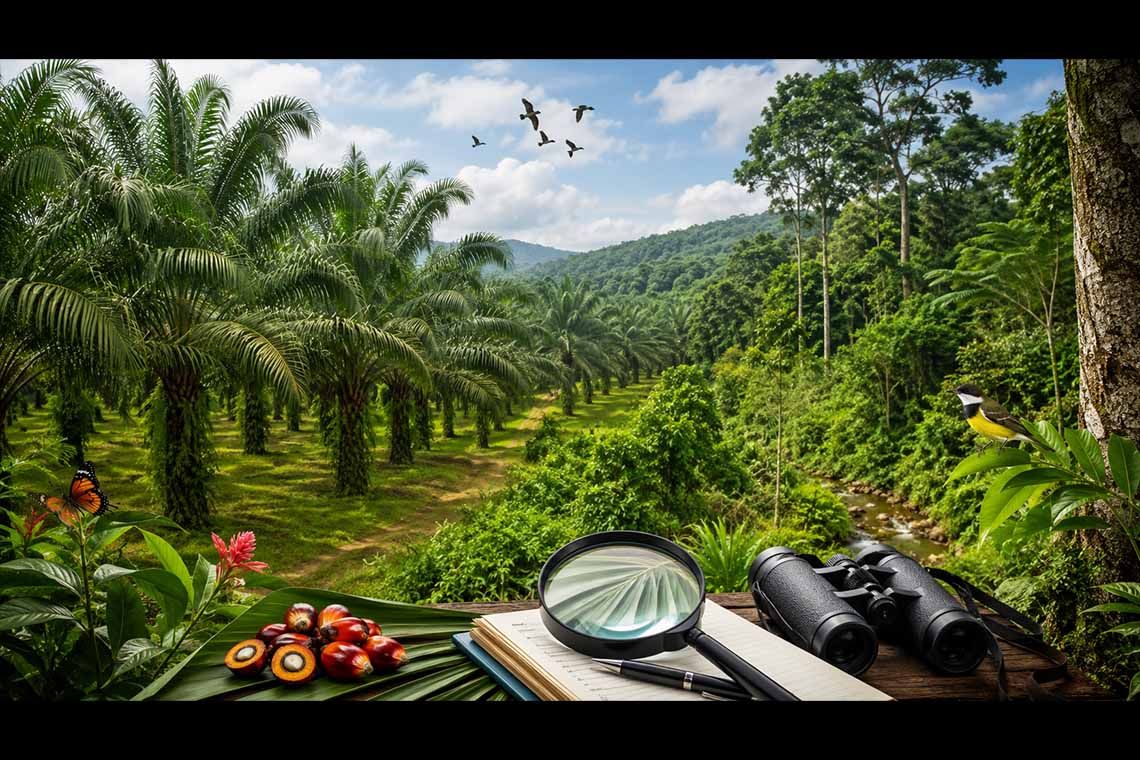
Sri Lanka’s decision to phase out oil palm cultivation has been shaped as much by perception rather than policy.
At the centre of the debate lies a powerful claim: that oil palm poses a significant threat to biodiversity and the environment.
Yet, a closer examination of available scientific evidence suggests that the issue may be more complex than commonly presented.
The current footprint of oil palm in Sri Lanka is relatively small around 11,000 hectares and has largely been established through the conversion of rubber lands rather than forests.
This distinction is critical. Unlike major oil palm-producing countries where forest clearing has driven expansion, Sri Lanka’s context is fundamentally different.
The biodiversity implications of converting rubber to oil palm are not equivalent to those of deforestation-driven plantation expansion.
A landscape already transformed
Sri Lanka’s biodiversity narrative cannot be separated from its long history of land-use change.
From the hydraulic civilisation era to colonial plantation expansion, forests have been systematically cleared and repurposed for agriculture.
Today, tea, rubber and coconut plantations together occupy nearly 800,000 hectares, all originally carved out of forested landscapes.
Even in the post-independence period, large-scale development projects such as the Mahaweli Scheme have contributed to further forest loss.
Against this backdrop, oil palm represents a relatively recent and limited landuse change in a landscape that has already undergone profound ecological transformation.
This raises an important question: is oil palm uniquely responsible for biodiversity loss, or is it being evaluated in isolation from the broader history of land-use change?
Understanding biodiversity beyond perception
Biodiversity is not a static concept. It encompasses genetic, species and ecosystem diversity, all of which are shaped by both natural and human influences.
Every land-use system, whether forest or plantation supports some form of biodiversity, though the composition and complexity differ significantly.
Forests, with their multi-layered structures, naturally support the highest levels of biodiversity.
In contrast, plantation systems whether tea, rubber, coconut or oil palm represent simplified ecosystems.
As a result, they typically support fewer species, especially endemic and threatened species.
Only a few comparative studies have been done in Sri Lanka on biodiversity associated with different plantation crops.
These studies indicate that differences among plantation types are often less pronounced than commonly assumed. Species assemblages in oil palm, rubber and tea plantations tend to be broadly similar, dominated by common species rather than rare or endemic ones.
In this context, converting one plantation crop to another may not result in dramatic biodiversity shifts, particularly when the original land use is already a managed agricultural system rather than a natural forest.
What the data actually shows
Empirical studies conducted in Sri Lanka and across Asia provide a more nuanced picture of oil palm’s biodiversity impacts.
Forest ecosystems consistently outperform all plantation systems in terms of species richness, density and conservation value.
This is unsurprising given their structural complexity. However, when comparing plantation crops, oil palm does not emerge as a clear outlier in terms of ecological harm.
In some instances, oil palm plantations have demonstrated comparable or even higher levels of certain biodiversity indicators relative to other crops.
For example, studies on leaf litter fauna show that oil palm can support higher densities of such organisms than tea, and similar levels to rubber.
Additionally, the unique architecture of oil palm trees creates microhabitats that support above-ground and below-ground biodiversity.
The accumulation of organic material in frond axils forms “suspended soils,” which host diverse communities of microorganisms and small fauna, an ecological feature not commonly observed in other plantation systems.
These findings challenge the notion that oil palm is inherently more damaging than alternative plantation crops.
The role of management practices
Perhaps the most important insight from the research is that biodiversity outcomes are shaped less by the crop itself and more by how the land is managed.
Practices such as heavy herbicide use, removal of understory vegetation and poor water management can significantly reduce biodiversity across all plantation types.
Conversely, more sustainable practices such as maintaining ground cover, preserving riparian buffers and reducing chemical inputs can enhance ecological outcomes.
Studies have also shown that increasing understory vegetation in oil palm plantations improves soil biodiversity and ecosystem functioning without compromising productivity.
Similarly, the presence of forest patches and waterway buffers within plantation landscapes can support a wider range of species, including mammals and birds.
This suggests that the debate should shift from crop selection alone to a broader focus on landscape management and best practices.
Ecosystem trade-offs
It is important to acknowledge that oil palm plantations, like all agricultural systems, involve trade-offs.
Compared to forests, they provide lower levels of ecosystem services such as climate regulation, habitat provision and biodiversity conservation.
However, they also deliver economic value through the production of marketable goods.
The challenge, therefore, is not to eliminate trade-offs entirely but to manage them effectively.
Notably, the most significant ecological impacts occur during the initial conversion of land particularly when forests are cleared.
In Sri Lanka’s case, where oil palm expansion has largely replaced existing plantations, these impacts may be less severe.
A policy debate in need of recalibration
The decision to ban oil palm cultivation appears to have been influenced by concerns that may not be fully supported by local empirical evidence.
While environmental safeguards are essential, policy responses must be grounded in context-specific data rather than generalised global narratives.
The evidence suggests that:
• All plantation systems support lower biodiversity than forests;
• Differences between plantation crops are relatively modest;
• Management practices play a critical role in determining ecological outcomes.
This raises a broader policy dilemma: whether restricting a single crop addresses the underlying challenges, or whether a more integrated approach to sustainable land management is required.
Sri Lanka’s plantation sector sits at the intersection of environmental sustainability and economic necessity.
Any policy decision must balance these competing priorities.
Rather than viewing oil palm solely through a binary lens of “harmful” or “acceptable,” there is a case for a more nuanced approach one that emphasises:
• Evidence-based decision-making;
• Improved plantation management practices;
• Landscape-level biodiversity conservation strategies.
Ultimately, the question is not just about oil palm.
It is about how Sri Lanka manages its agricultural landscapes in a way that sustains both ecological integrity and economic viability.
In a policy environment increasingly shaped by sustainability concerns, the ability to align science, practice and regulation will determine whether the country can move beyond debate toward durable solutions.
Latest Posts











Video
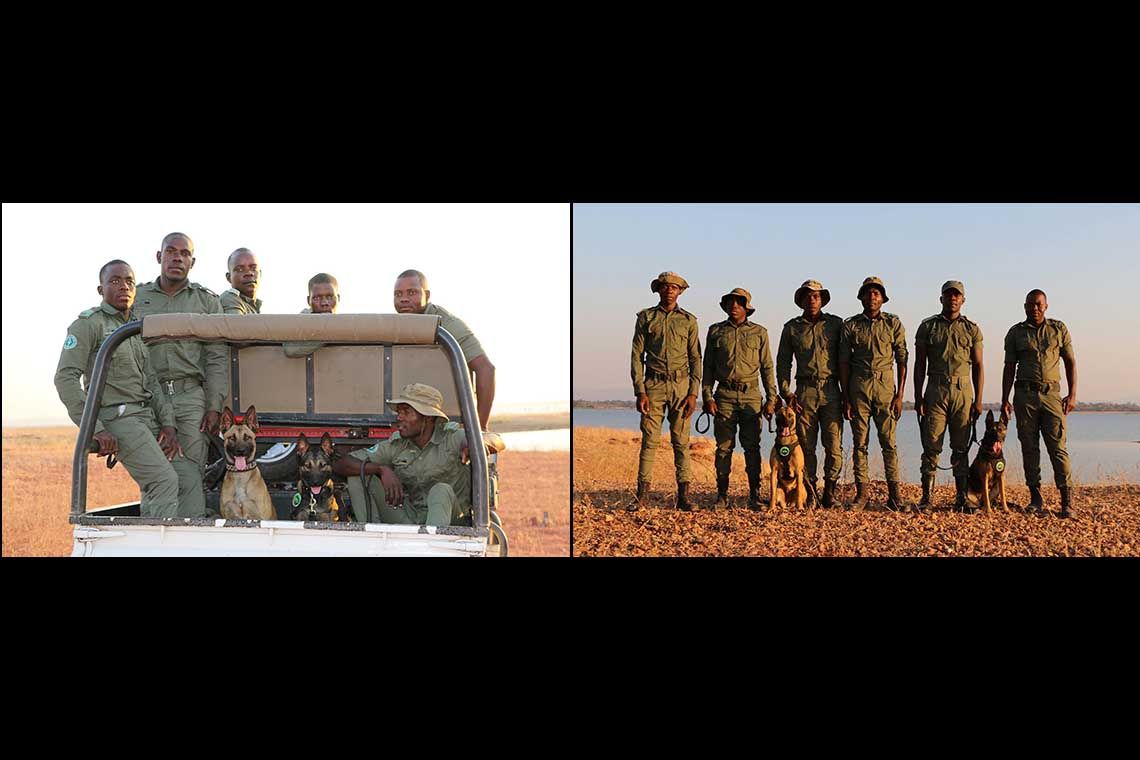
K9 unit flown by Emirates SkyCargo to Zimbabwe begins frontline operations
Vega and Kuda, two specialist conservation dogs, transported by Emirates SkyCargo from London to Harare via Dubai in partnership with UK charity Dogs 4 Wildlife, have arrived safely and acclimatise