Ambuluwawa at 30 : A Landmark of Religious Harmony, Tourism Growth, and Biodiversity Conservation
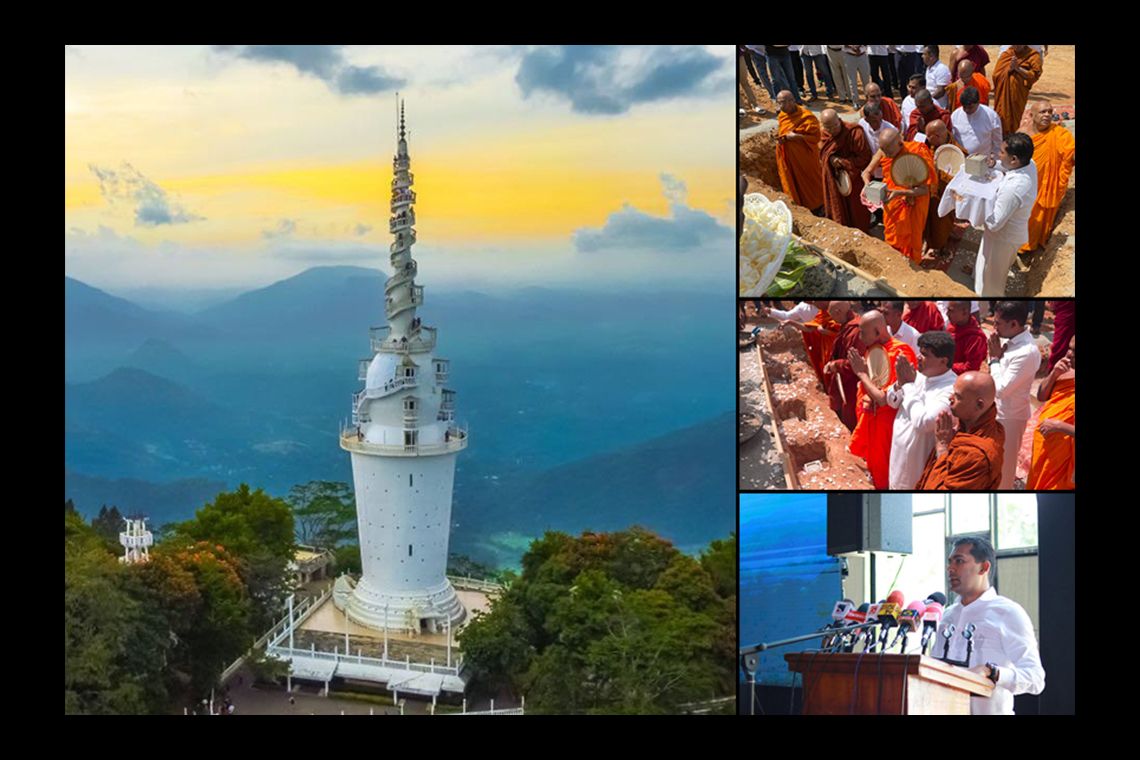
The Ambuluwawa Religious and Biodiversity Complex in Gampola has evolved into one of Sri Lanka’s most distinctive and internationally recognized destinations, standing today as a powerful symbol of unity, environmental stewardship, and sustainable tourism.
Marking its 30th anniversary on March 27, 2026, the site reflects a remarkable transformation from a barren, underutilized hill into a thriving multi-religious and ecological landmark.
As part of the 30th anniversary commemorations, a series of events have been organized to strengthen its role in education, spirituality, and community development.
These include the laying of the foundation stone for an international meditation center and the Niyangoda Vijithasiri International Library, supported by a valuable collection of rare books donated by Niyangoda Vijithasiri Thero.
Additional religious observances, including interfaith ceremonies and community programs, reflect the inclusive spirit that defines Ambuluwawa.
At the ceremony, Anuradha Jayaratne, Chairman of the Ambuluwawa Religious and Biodiversity Center, stated that all programmes were organized in line with the 30th anniversary of Ambuluwawa, with the intention of offering prayers for an end to ongoing global conflicts and for the creation of a peaceful social environment in which the lives of all nations are safeguarded and people can live in harmony and happiness.
Established in 1996 under the vision of the then Minister of Agriculture, Lands, and Forestry, D.M. Jayaratne, Ambuluwawa was conceived as more than just a development project.
It was designed as a space where religious coexistence could be actively demonstrated.
At a time when the country was facing religious and social tensions, the initiative sought to create a practical model of harmony by integrating places of worship representing Buddhism, Hinduism, Islam, and Christianity within a single complex.
Today, it stands as a living example of peaceful coexistence and mutual respect among different faiths.
Geographically, Ambuluwawa is located at an elevation of approximately 3,765 feet above sea level, spanning a vast area of over 1,000 hectares, of which around 112 hectares are dedicated to the biodiversity complex.
The surrounding landscape, once largely barren except for a few scattered trees, has been transformed into a carefully managed ecological zone.
This commitment to biodiversity conservation highlights the importance of balancing development with environmental sustainability, ensuring that the natural ecosystem is preserved while still allowing for human interaction and exploration.
Tourism has been one of the most significant outcomes of Ambuluwawa’s development.
The complex now attracts a substantial number of both local and international visitors, with approximately 8% of Sri Lanka’s annual foreign tourist arrivals including it in their itineraries.
With around 40 activity points offering educational, recreational, and spiritual experiences, Ambuluwawa provides a holistic visitor experience that combines nature, culture, and adventure.
Its growing popularity has also contributed positively to the local economy, particularly benefiting businesses in Gampola and the wider Kandy district.
The governance of Ambuluwawa is structured under Act No. 44 of 2009, which ensures regulatory oversight through the Auditor General’s Department and includes permanent representation from relevant government ministries.
Under the leadership of its governing board, chaired by Anuradha Jayaratne, the complex has seen significant financial and infrastructural growth.
Between 2019 and 2024, revenue reportedly increased 21-fold, while capital assets rose from approximately LKR 372 million to LKR 1.4 billion.
This growth reflects both improved management practices and the increasing demand for the site as a premier destination.
Religious and community engagement continues to be a cornerstone of Ambuluwawa’s identity.
The participation of leading Buddhist clergy, including Warakagoda Gnanaratana Thero, Makulewe Vimala Thero, and Karagoda Uyangoda Maithrimurthi Thero, along with other representatives of the Sangha, underscores its spiritual significance.
The involvement of prominent national figures such as Nilanga Dela, Diyawadana Nilame of the Sri Dalada Maligawa, further reinforces its cultural and national importance.
Looking ahead, proposals such as the cable car project, once completed, are expected to further enhance accessibility, potentially transforming Ambuluwawa into an even greater economic catalyst for the region.
By reducing travel time and increasing visitor flow, such developments could significantly boost local livelihoods and strengthen regional tourism infrastructure.
In essence, Ambuluwawa represents a unique convergence of religious harmony, environmental conservation, and tourism development.
Its journey over the past three decades stands as a testament to visionary planning and collaborative governance, positioning it not only as a national asset but also as a global example of how diverse elements can coexist and thrive in harmony.
Latest Posts











Video

K9 unit flown by Emirates SkyCargo to Zimbabwe begins frontline operations
Vega and Kuda, two specialist conservation dogs, transported by Emirates SkyCargo from London to Harare via Dubai in partnership with UK charity Dogs 4 Wildlife, have arrived safely and acclimatise