Embedding Human Rights, Equity and Integrity into Business Leadership

At its 2026 Social Sustainability Programme Kick-Off, the UN Global Compact Network Sri Lanka convened business leaders to advance the translation of global ambition into practical corporate action on inclusion, integrity and human rights.
On 24 February 2026, the UN Global Compact Network Sri Lanka (Network Sri Lanka) convened business leaders at Barefoot Garden Café for its 2026 Social Sustainability Programme Kick-Off, delivered in collaboration with Good Life X.
The gathering did more than introduce a calendar of events. It positioned Sri Lanka’s corporate community within the broader direction of the UN Global Compact’s 2026–2030 global strategy — a strategy anchored in three imperatives: equipping companies to act, catalyzing collective action, and advancing the business case for responsible leadership.
Equipping Companies to Act
At its core, the 2026 Social Sustainability agenda is designed to move companies from commitment to capability.
Within the Diversity & Inclusion Working Group, this means building practical pathways toward equal pay for equal work and strengthening male allyship as a governance issue rather than a cultural afterthought.
It means examining sexual and reproductive health, disability inclusion, and mental health not as employee benefits, but as structural determinants of productivity and retention.
It means sharpening strategic communications so inclusion is embedded in brand integrity.
It also means applying science-based behavioural change approaches to shift organizational culture in measurable ways.
Across the Business & Human Rights Working Group, equipping companies takes the form of deepened engagement on decent work and living wage implementation, strengthening human rights due diligence processes, and addressing emerging risk areas such as AI and digital rights.
It extends to reinforcing business integrity and anti-corruption frameworks, understanding the social dimensions of a just transition, and recognizing the link between child rights, nutrition, and workforce productivity.
The emphasis is practical: tools, dialogue, peer learning, and structured engagement that translate global principles into operational reality.
Catalyzing Collective Action
The Kick-Off reinforced the Network’s role as a convening platform. Social sustainability challenges — from wage equity to digital governance — cannot be addressed in isolation.
They require shared learning, alignment across sectors, and credible collaboration between business and institutional partners.
By bringing companies together in an open, conversational format, the session reflected a deliberate move toward collective problem-solving.
The choice of Barefoot Garden Café signaled a setting designed for exchange rather than ceremony — reinforcing that responsible business leadership is strengthened through dialogue and shared accountability.
Advancing the Business Case
Throughout the evening, one message remained consistent: social sustainability is not CSR.
It shapes governance structures.
It strengthens risk management.
It influences investor confidence.
It underpins supply chain resilience.
It determines talent attraction and retention.
In a global environment defined by regulatory evolution and market scrutiny, responsible business conduct is increasingly synonymous with competitive positioning.
The 2026 agenda therefore places equal emphasis on values and value creation — demonstrating that integrating human rights, equity, and integrity into decision-making enhances long-term performance.
The session concluded with an interactive quiz facilitated by Good Life X — energetic, collaborative, and reflective of the Network’s engagement model.
Essential themes were explored in a format that encouraged connection, reinforcing that strategic conversations can be rigorous without being rigid.
As the UN Global Compact advances its 2026–2030 ambition globally, the direction in Sri Lanka is clear: equip companies with the tools to act, catalyze collective momentum, and articulate — with clarity and evidence — the business case for social sustainability.
Through five thematic Working Groups — Diversity & Inclusion, Business & Human Rights, Climate Emergency Task Force, Water & Ocean Stewardship, and Sustainable Supply Chain & SME — UN Global Compact Network Sri Lanka convenes the private sector to move from commitment to implementation.
These platforms translate global standards into practical action, strengthen governance and accountability, and drive collective progress towards inclusive, resilient, and sustainable economic growth aligned with national and global priorities.
For more information on joining the UN Global Compact Network Sri Lanka, please reach out to This email address is being protected from spambots. You need JavaScript enabled to view it.
Latest Posts











Video
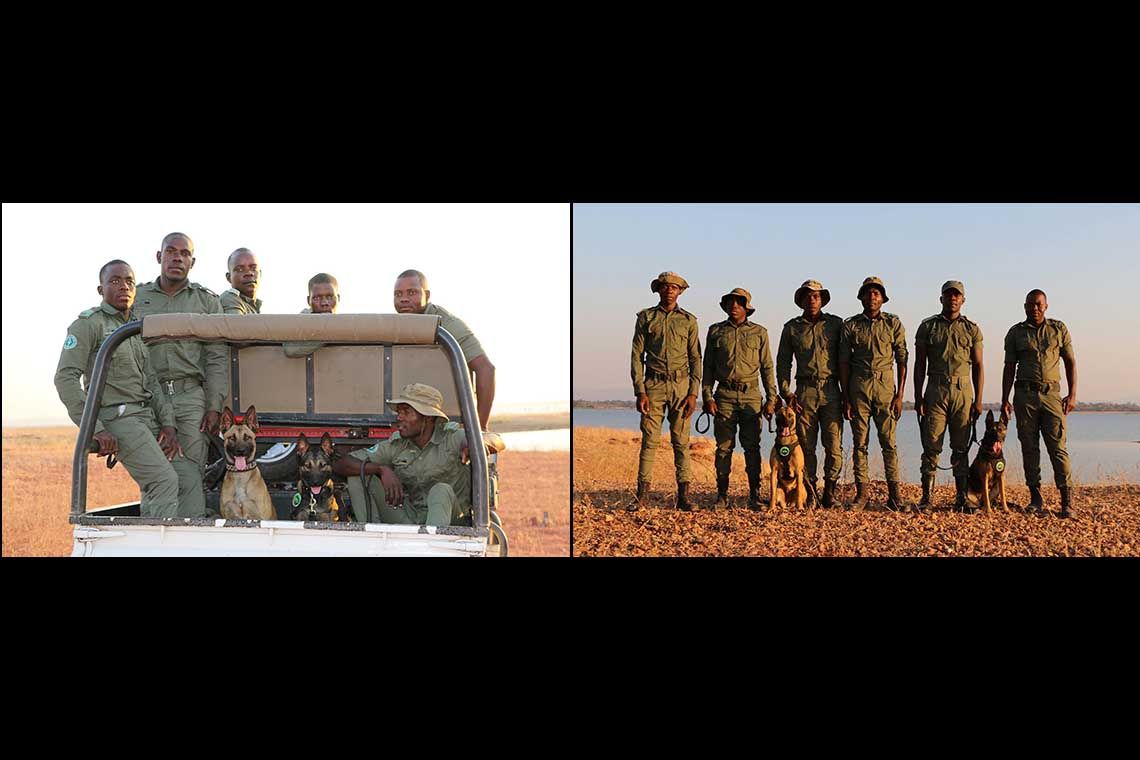
K9 unit flown by Emirates SkyCargo to Zimbabwe begins frontline operations
Vega and Kuda, two specialist conservation dogs, transported by Emirates SkyCargo from London to Harare via Dubai in partnership with UK charity Dogs 4 Wildlife, have arrived safely and acclimatise